Serving Hillsboro & all of Washington County, OR Free estimates: (971) 397-9361
Hillsboro Excavation Co.

Home › North Plains

Septic System Installation in North Plains, OR

On rural acreage near North Plains, you have room to site a septic system properly — but that means choosing the system location before the house plans are finalized, not after.

Licensed & insured in Oregon Free on-site estimates Local Washington County crew Wet-season ready

Installing a septic system on a rural parcel outside North Plains is a fundamentally different project than fitting one onto an urban infill lot. There is room to site the system properly, which means the design decisions made early in the project — where the system goes, how much land is reserved for the future replacement field, how the access route is laid out — are made from a position of options rather than constraints. Hillsboro Excavation Co. handles the excavation for new septic installations on agricultural and wooded acreage, and the most important advice for a new-construction project is to determine where the septic system will go before the house plans are finalized, not after.

North Plains covers 0.90 square miles of incorporated land, but the parcels surrounding the city limits extend across agricultural fields and wooded terrain. New builds on these larger rural lots have the room to site a system in the optimal location for soil conditions and topography, but that opportunity is lost the moment the house footprint is committed to a location that was chosen without consulting the septic design. On rural acreage, the system drives the site plan; the house follows.
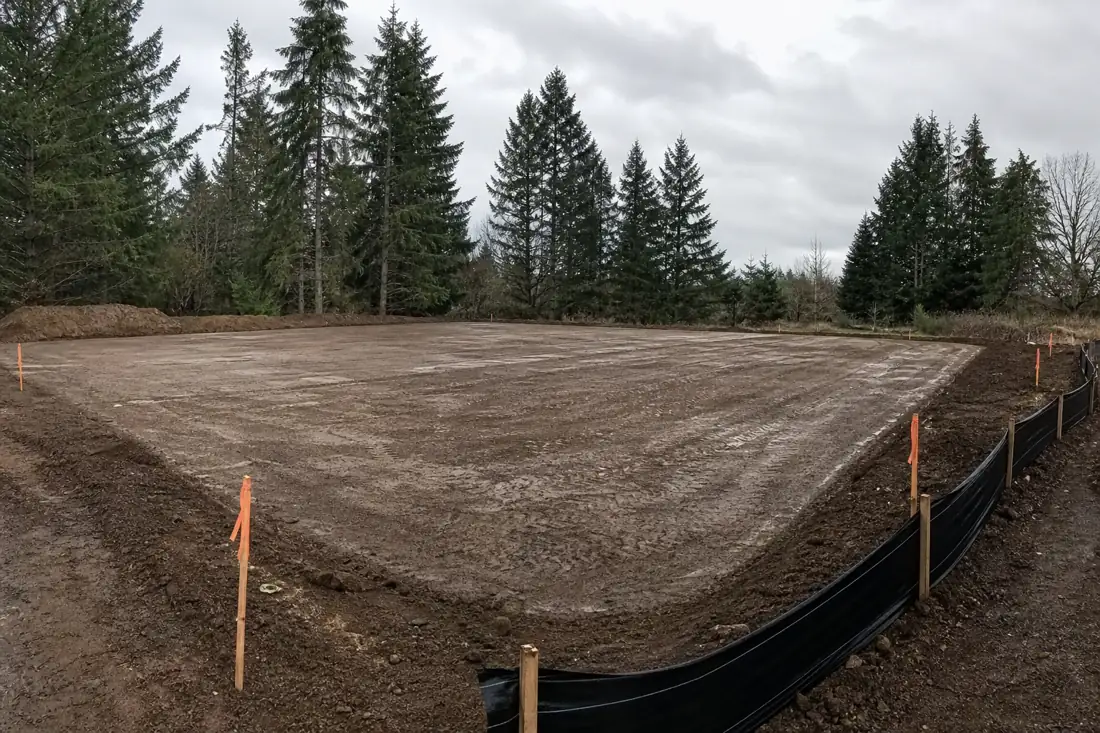
Site preparation with excavator on rural North Plains OR acreage parcel prior to septic system installation
On rural acreage, site preparation establishes equipment access to the system location before the house construction creates obstacles that limit machine movement.

Why the Septic System Location Should Be Chosen Before the House Is Sited

On a large rural parcel, the temptation is to design the house first and work out the septic system location afterward. This sequence routinely creates problems that are expensive to fix because the house, once sited, establishes the setbacks that define where the system cannot go. Starting the septic evaluation before the house plans are finalized means the best soil location drives the layout rather than accepting whatever ground is left over after the building is placed.

These decisions interact with each other, and getting the sequence right is easier at the beginning of a project than after the house is framed. Excavation contractors in Hillsboro, OR who have worked rural parcels know which of these issues surface most often and can flag them before the site plan is locked.

Agricultural Drain Tile: The Hidden Variable Under a Proposed Field

Much of the farmland surrounding North Plains was tiled with agricultural drain tile over the past century. These clay or concrete pipes, typically four to six inches in diameter, were laid in parallel runs a few feet below the surface to lower the water table and allow cultivation of the Tualatin Valley’s naturally wet silty clay soils. The tile systems were installed by individual farmers, were rarely mapped in any systematic way, and the original installation records are generally lost. When a drainfield is excavated on former agricultural ground, hitting an active tile line is common. A functioning tile line under a drainfield is a problem: effluent from the field can enter the tile and travel to whatever outlet the tile drains to, often a ditch or stream, bypassing the soil treatment the drainfield is supposed to provide. The solution — intercepting the tile, routing it around the field, and confirming it does not daylight within the field footprint — requires excavation beyond the original field scope and may require the field layout to be adjusted to avoid the tile entirely.

Reserve Area: Planning for the System You Will Need in 25 Years

Every drainfield has a finite service life. The biological processes that treat effluent in the soil gradually produce a low-permeability biomat layer at the trench bottom, and over 20 to 30 years that layer reduces absorption capacity to the point where the field must be rested or replaced. Oregon rules require a reserve area to be identified and set aside at the time of original installation specifically because drainfield replacement is a predictable event, not an emergency. On a rural parcel with adequate area, designating the reserve site is straightforward: pick the second-best evaluation area and mark it on the permit. The critical requirement is that the reserve area be protected from all vehicle traffic, soil disturbance, and construction activity for the entire life of the primary field. Driving over the reserve area with heavy equipment during house construction, or parking a concrete truck on it, compacts the soil and can disqualify the site for future use. The Hillsboro excavation crew flags the reserve area boundaries before construction activity begins so every subcontractor on the job knows what ground is off-limits.

Permits, Costs, and Construction Sequencing on Rural Acreage

Washington County Environmental Health issues septic permits for rural parcels around North Plains on the same process as urban lots, but the site evaluation often involves more parcel area because the evaluator may need to test multiple locations to identify both the primary system site and the required reserve area. The county’s site evaluation fee covers a defined number of test holes; if the evaluation requires additional holes to establish the reserve area or to investigate alternatives when the first candidate location does not pass, additional fees apply. The evaluation must be done during a period when soil moisture is representative of seasonal conditions — the October-to-May wet season — because soils that appear adequate in the dry season may have a seasonal high water table that restricts usable depth during winter.

On a rural acreage new-construction project, the septic system is typically one of the first things excavated rather than one of the last. The system needs to be in the ground and tested before the house can receive a certificate of occupancy, which means delaying the septic excavation delays the whole project timeline. Getting the permit early, scheduling the excavation before the house foundation is poured, and protecting the field and reserve area from construction traffic throughout the build are the three steps that keep a rural new-construction project on schedule. The Hillsboro excavation crew can coordinate the septic excavation timing within the broader construction schedule to avoid conflicts with concrete, framing, and finish trades that need site access during the same period.

Excavation Services We Provide in North Plains

New septic systems on rural acreage require sequencing that most house builders get wrong — the excavation contractors in Hillsboro, OR can walk you through the correct order before anything is committed to grade.

Drainage & French Drains

Drainage & French Drains →

Site Preparation

Site Preparation →

Utility Trenching

Utility Trenching →

Grading & Leveling

Grading & Leveling →

Frequently Asked Questions

Should I site the house or the septic system first on my rural North Plains parcel?

The septic system should be evaluated first. The site evaluation identifies where the soil is suitable for a drainfield, and that location — along with the required reserve area — constrains where the house can be placed relative to it. If the house is sited first, the septic system must fit in whatever ground remains after setbacks are applied to the house footprint. On a large rural parcel you have options; locking in the house first eliminates most of them.

What is a reserve drainfield area and do I have to designate one?

Oregon rules require a reserve area to be identified and protected at the time of the original septic installation. The reserve is where the replacement system will be installed in 20 to 30 years when the primary drainfield reaches the end of its service life through normal biomat accumulation. The reserve area must be the same size as the primary field and must be protected from all vehicle traffic, compaction, and soil disturbance for the entire life of the primary system.

What is agricultural drain tile and why does it matter for my septic field?

Agricultural drain tile is a network of perforated clay or concrete pipes installed in past decades to lower the water table on Tualatin Valley farm ground and make wet soils cultivable. These pipes are rarely mapped and are frequently discovered during excavation rather than before it. A functioning tile line under a drainfield is a problem because effluent can travel through the tile to its outlet point, bypassing soil treatment. Finding tile during excavation may require rerouting the field layout.

How do I protect the drainfield area during house construction?

Mark the field and reserve area boundaries clearly before any construction activity begins, and brief every subcontractor on what the marked ground is and why it cannot be driven on. Drainfield soil is porous by requirement; a concrete truck or boom lift driving over it compacts the structure that makes absorption possible, and that damage cannot be undone by tilling or aerating. The excavation crew can stake the boundaries after the system is installed so the markings remain visible throughout the build.

What does a new septic install cost on rural acreage near North Plains?

Cost is driven by the total lineal footage of drainfield trench in the approved plan, the depth of each trench, site access conditions, and whether subsurface obstacles — agricultural drain tile, basalt, or high groundwater — are encountered. Long runs from the house to the tank and from the tank to the field add pipe and trench footage. On wooded parcels, clearing a path for the excavator adds to the mobilization scope. A firm number requires the approved plan and a site visit.

Does the installation need to happen at a specific time of year?

The site evaluation should happen during the wet season (October through May) so groundwater conditions reflect the seasonal high that governs system design. The excavation itself can happen any time the permit is in hand, but Tualatin Valley soils become very difficult to work during extended wet periods when they are saturated. On a rural new-construction project, scheduling the septic excavation early in the construction sequence — before the house creates access constraints — is strongly preferable.

Get Your Free Hillsboro Excavation Estimate

Tell us about your project and we will come walk the site and give you a straight, itemized quote — no obligation, no pressure. Call us, or send the form and we will get back to you the same business day.

We only use your info to contact you about your project. No spam, ever.

Prefer to talk?

Call or text and reach us directly. We answer during business hours and return every message.

(971) 397-9361

Hours: Mon–Sat, 7am–6pm